
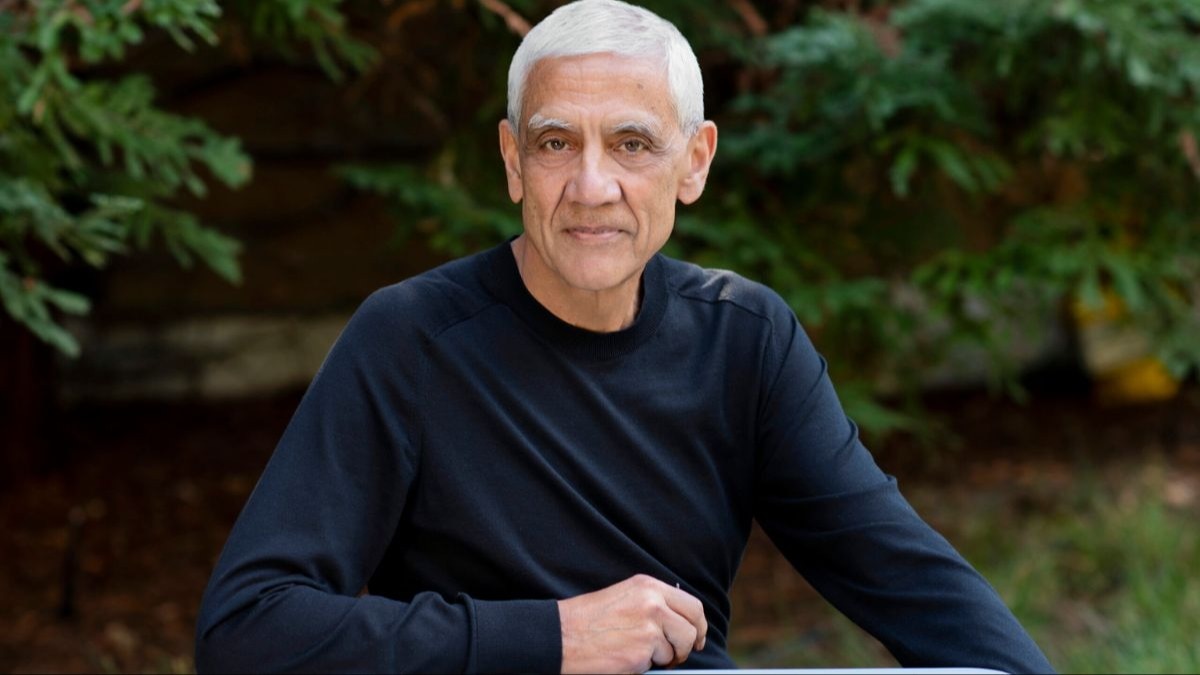
AI’s Role in Futuristic Job Markets – Insights from Vinod Khosla
Billionaire venture capitalist Vinod Khosla has raised concerns about what he terms one of the most significant transitions in human history: artificial intelligence taking over a large share of current job roles in the next five years. In a discussion on Zerodha co-founder Nikhil Kamath’s WTF podcast, this Silicon Valley veteran forecasted that AI could handle up to 80 per cent of the economically valuable work performed by people, presenting a major challenge to existing career frameworks.
The Death of Specialisation?
Khosla urged young professionals and students to rethink their career strategies. In an environment where machines can excel in specific tasks, he emphasised that the advantage lies in being versatile. He suggested adopting a generalist mindset, stating that AI is likely to outshine humans in specialised areas.
He highlighted that traditional roles are rapidly diminishing, and thriving in an AI-dominated landscape will require creativity, critical thinking, and the skill to make connections across various fields—abilities that machines continue to find difficult to replicate.
Pick a Problem Worth Solving
For entrepreneurs navigating this change, Khosla advised against pursuing conventional business ideas. He stated that rather than simply attempting to create a business, aspiring founders should pursue ideas that seem like dreams. As the execution of ideas becomes more manageable with AI, he asserted that true value will derive from ambition and creativity.
Education and Healthcare Could Become Free
While the job landscape is poised for substantial upheaval, Khosla is optimistic about AI’s capacity to democratise access to crucial services such as education and healthcare. He predicts that within the next 25 years, high-quality medical advice and education could be made virtually free.
He envisions a future where individuals can receive medical consultations equivalent to top-tier doctors and education matching that of the best schools, facilitated by intelligent AI tutors providing around-the-clock personalised lessons, effectively reducing the reliance on expensive universities and private tutoring.
Big Cities No Longer Gatekeepers of Opportunity
The influence of AI will extend beyond individual jobs; it has the potential to redefine the geography of opportunities. Khosla believes that AI will lead to a decentralisation of economic access, enabling smaller towns and remote regions to compete with prominent urban centres like New York and London. He remarked that the necessity of physical proximity to job opportunities is on the verge of becoming obsolete.
In a climate where global tech firms are downsizing under the banner of restructuring, Khosla’s insights clarify an important point: AI is not just approaching the workforce; it is already present. Instead of fearing these changes, he encourages individuals to confront them with curiosity, courage, and a readiness to adapt.
Khosla stated that AI is merely a tool, and how that tool is utilised depends entirely on humanity’s choices.