
Highlights
TVS Orbiter Electric Scooter Review
TVS has recently emerged as a leader in electric two-wheeler sales in India. The iQube has played a significant role in this achievement, and now, the company has introduced the Orbiter, a new electric scooter built on a novel platform. After spending two weeks with the Orbiter, it is evident that while it introduces fresh concepts, it also raises several inquiries, which this review aims to address.
There is much to appreciate in this nimble scooter, complete with a variety of clever features. However, whilst it excels in agility, the Orbiter may require further enhancement in its speed performance.
Design and Quality
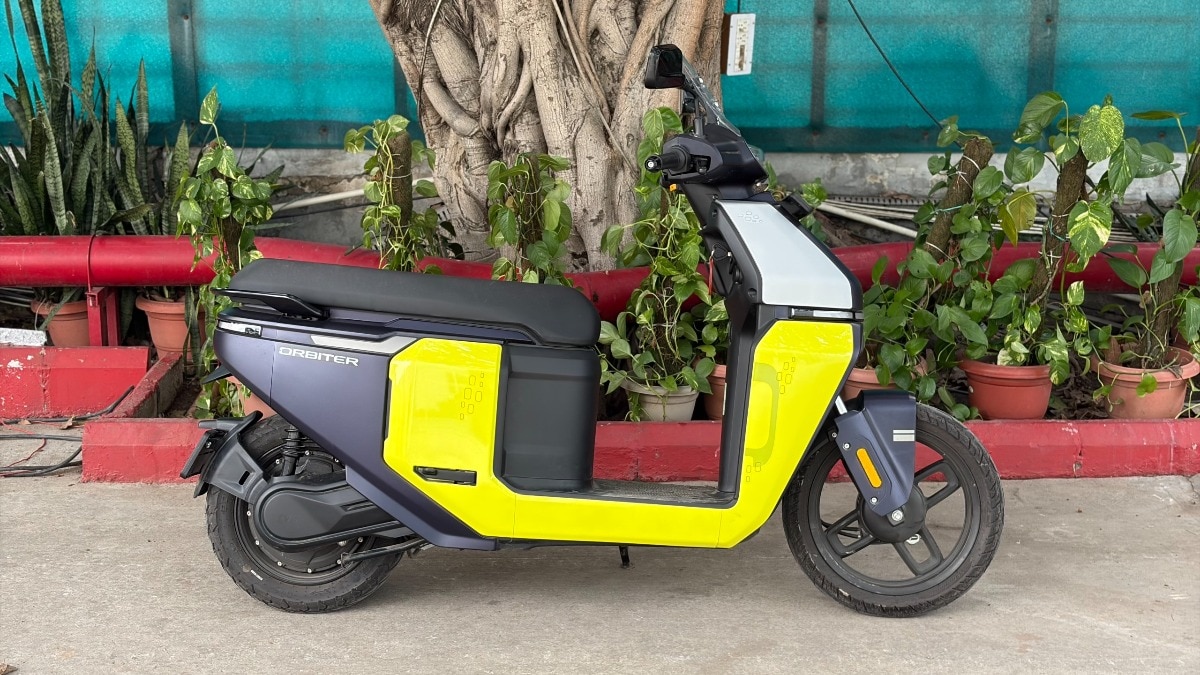
The Orbiter features a bold, unconventional design characterised by a boxy appearance complemented by sharp edges and flowing curves. Although it may not appeal universally like its sibling, the iQube, it definitely stands out, especially in vibrant colour options. The Neon Sunburst variant in yellow and blue attracted plenty of attention on the road. The front’s connected DRL (Daytime Running Light) particularly caught the eye, evoking a futuristic vibe reminiscent of a Cyberpunk theme.
Quality continues to be a hallmark of TVS. The plastic body panels exhibit sturdiness, while the fit and finish demonstrate excellence, showcasing no conspicuous gaps or rough edges. The headlight, although familiar in structure, aligns well with the overall design of the Orbiter. Its illumination at night proved to be impressive.
Riding Position and Comfort
For taller individuals, the Orbiter’s handlebar provides ample clearance, preventing any obstruction during tight turns. Riders do not feel as though they are perched with their knees raised, which is a notable ergonomic advantage. The Orbiter offers comfort and manageability for both shorter and taller riders alike, with an adequately sized seat at 845 mm, providing sufficient space for passengers or luggage.
Performance and Refinement
The Orbiter is powered by a hub-mounted BLDC motor delivering a peak output of 2.5kW and torque of 120Nm. It operates quietly, ensuring a peaceful riding experience at all speeds, except for a slight motor hum at its top speed. However, this “top” speed feels rather modest.
There are two riding modes: ‘Eco’, which caps speed at 45kph, and ‘City’, which reaches a maximum speed of 68 kmph. The performance can be characterised as leisurely; it doesn’t feel slow, yet lacks the exhilarating kick typically found in more advanced electric vehicles. The scooter excels in urban environments, so long-distance highway travel should not be anticipated. Quick maneuvers through traffic are manageable, making it suitable for office commutes, shopping, and family errands. Daily commutes were enjoyable, with the motor seeming adequately powered, aided by the cruise control feature, which alleviated the fatigue of constant throttle engagement.
Range and Charging
The Orbiter shares the 3.1kWh battery found in the iQube but claims an impressive IDC range of 158km. TVS credits this achievement to improved aerodynamics and motor tuning, although the limited top speed likely contributes as well. In City mode, a full charge indicated a range of 110km, while Eco mode extended that to 148 km. Overall, these range figures are commendable for city driving.
A standard 650W charger can take the battery from 0 to 80% in approximately 4 hours and 10 minutes, as per TVS’s specifications, and personal tests confirmed similar results.
Ride and Handling
Like the motor, the suspension is calibrated more for comfort than sportiness. It handled the pothole-laden roads of NCR gracefully, and even steep speed bumps posed no challenge. The hill-hold assist function operates effectively, whether on ramps, inclines, or large speed bumps, preventing any backward rolls while navigating potential bumps. The convenience of parking assistance for both forward and reverse manoeuvres adds to the usability.
A 14-inch front wheel enhances stability while maintaining agility in corners. However, braking presents a concern; both the front and rear employ 130mm drum brakes. The absence of a front disc brake, even as an optional feature, leaves some riders feeling slightly disappointed.
Features and Safety
The Orbiter is equipped with a colour LCD display, cruise control, and a well-executed hill-hold feature. The dashboard provides turn-by-turn navigation and call alerts directly from the TVS Connect app. Practicality is a strong suit, boasting a 34-litre boot, though it has limited depth and may not accommodate larger helmets; a useful front cubby and USB charging port are included.
The TVS Connect app enhances functionality, offering details on nearby charging stations and real-time charging status.
Verdict
With a starting price of approximately Rs 1.08 Lakh (Noida on-road price post-subsidies), the Orbiter stands as the entry-level model in the TVS EV range, despite a slightly cheaper version of the iQube being available. It is a well-engineered, practical scooter that provides ample space and features, making it an excellent choice for beginners, families, or anyone whose primary travel needs are urban. However, its modest performance and subdued riding characteristics leave its target audience feeling somewhat undefined. The Orbiter is undoubtedly impressive on its own, yet it faces significant competition from other models within TVS’s own lineup.