• About Us
  • Contact Us
  • Advertise
  • Privacy Policy
  • Terms and Conditions
Tuesday, April 14, 2026
  • Login
  • Register
StartupSuperb
  • NewsLatest
    • Trending
    • International Insights
    • Reports
  • Funding FlowJust In
  • Artificial Intelligence
  • Tech
  • Marketing
  • Resources
    • Books
  • Shark Tank
    • Shark Tank India
  • Startup Stories
    • Founder Fridays
    • Superb Shepreneurs
No Result
View All Result
  • NewsLatest
    • Trending
    • International Insights
    • Reports
  • Funding FlowJust In
  • Artificial Intelligence
  • Tech
  • Marketing
  • Resources
    • Books
  • Shark Tank
    • Shark Tank India
  • Startup Stories
    • Founder Fridays
    • Superb Shepreneurs
No Result
View All Result
StartupSuperb
No Result
View All Result
  • News
  • Funding Flow
  • Artificial Intelligence
  • Tech
  • Marketing
  • Insights
  • Resources
  • Shark Tank
  • Startup Stories
  • Social Superb
ADVERTISEMENT
Home Artificial Intelligence

The Hidden Energy Drain of AI: Stanford Predicts 29.6 GW Consumption by 2025

Akash Das by Akash Das
April 14, 2026
in Artificial Intelligence, Tech
Reading Time: 6 mins read
0
A A
0
The Hidden Energy Drain of AI: Stanford Predicts 29.6 GW Consumption by 2025
ADVERTISEMENT
Share on LinkedInShare on FacebookShare on X.comSend on TelegramSend on WhatsApp


AI Computing Capacity: Understanding the Infrastructure Behind Innovations


AI computing capacity has transformed the landscape of technology by enabling chatbots to respond to inquiries, generate images, and assist in research. While the advancements in machine learning are impressive, the essential role of a sophisticated infrastructure frequently goes unnoticed. Each interaction relies on an intricate, large-scale, and costly system that makes these capabilities feasible.

The AI Index 2026 report from Stanford University illustrates that the evolution of AI is no longer solely dependent on software and algorithm enhancements; the emphasis has shifted towards industrial-scale hardware infrastructure. It reveals that the global capacity for AI computing has surged by approximately 3.3 times annually, with projections indicating a remarkable 17.1 million GPUs in operation by early 2026.

This substantial growth compels governments and technology firms to reconsider energy supplies, electrical grids, and international supply chains. Companies such as Google, Microsoft, Amazon, and Meta are investing hundreds of billions of dollars into data centres and power infrastructure dedicated to AI.

Also read: Inside India’s first open-access quantum test beds in Amaravati built at half the global cost

H2: Surge in AI Computing Capacity

The research underscores that the scale of computing power available for AI is considerable and expanding swiftly. Since 2022, the capacity for AI computing has increased more than threefold annually. It now aligns with the equivalent of 17.1 million advanced AI chips like Nvidia’s H100.

The global landscape of AI computing capacity is predominantly influenced by major technology firms such as Nvidia, Google, and Amazon. The Stanford University study indicates that Nvidia accounts for over 60% of the world’s AI accelerator capacity, with Google and Amazon handling a significant portion of the remainder. These corporations are heavily investing in infrastructure to secure the necessary hardware, data centres, and related components.

The report highlights that the increase in computing capacity closely mirrors investment trends, with leading AI firms ramping up expenditures. The infrastructure sector has emerged as the fastest-growing focus of private AI investment.

Also read: India’s data centre capacity set to reach 2GW by 2026, backed by $30 billion in investments: Report

H3: Significant Energy Costs for AI Innovations

The report exposes the underlying costs linked to the rapid advancement of AI, primarily associated with the substantial energy demands required to run data centres, train sophisticated models, and maintain continuous computational operations.

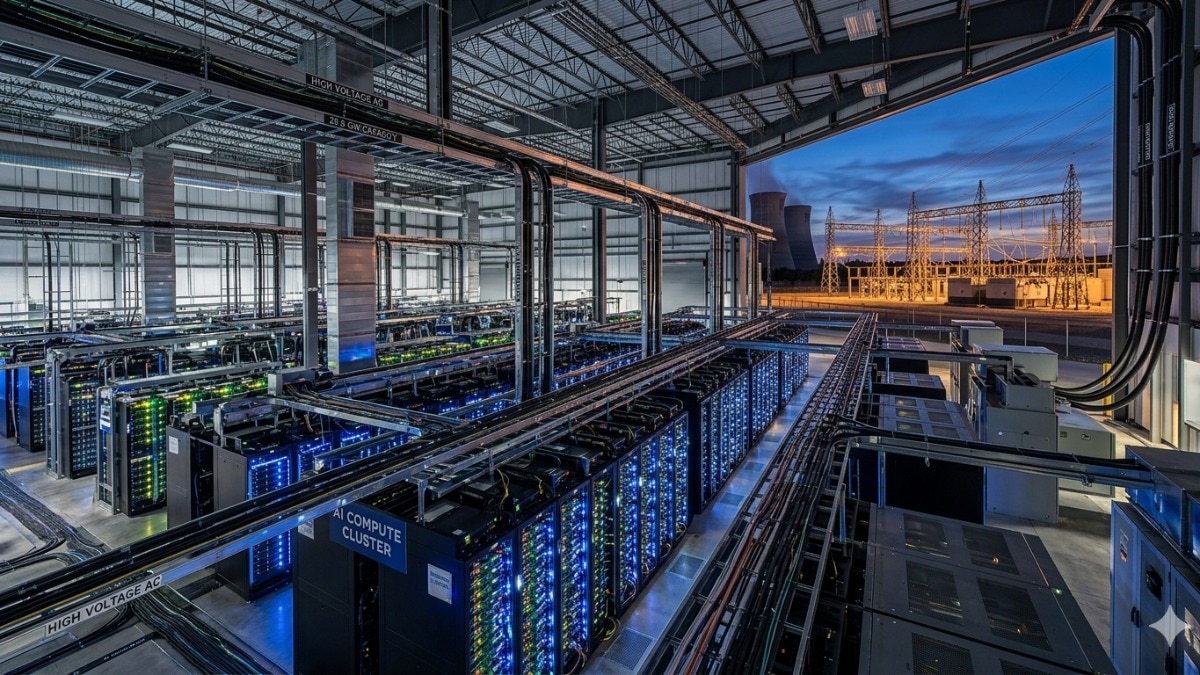
By late 2025, AI data centres were consuming an estimated 29.6 gigawatts of global power, corresponding to New York State’s peak electricity demand. Of this total, approximately 11.8 gigawatts were allocated to AI chips, while the balance supported systems like cooling, networking, and other crucial data centre components.

However, AI infrastructure extends beyond mere powerful chips; modern AI data centres also rely on a comprehensive stack of components, forming a complex ecosystem of hardware and infrastructure that functions collaboratively behind the scenes.

These intricate systems rely heavily on technology firms such as Taiwan Semiconductor Manufacturing Company (TSMC), Nvidia, SK Hynix, Samsung Foundry, among others, each playing distinct roles in design, manufacturing, assembly, and additional processes.

As 2026 progresses, establishing and securing AI infrastructure has become a top priority. While the latest AI model rollouts capture public attention, the real competition occurs in semiconductor foundries and electrical substations, where enhancing capacity is essential to meet the growing power demands associated with AI.


ADVERTISEMENT
Tags: AIartificial intelligencemachine learning
ShareShareTweetShareSend
ADVERTISEMENT
Akash Das

Akash Das

Hi, I’m Akash, an entrepreneur, tech enthusiast, digital marketer, and content creator on a mission to inspire innovation and drive transformation through technology and creativity.My expertise extends to digital marketing, where I craft data-driven strategies for SEO, social media, and branding to empower businesses and creators to grow their online presence. Alongside my entrepreneurial journey, I share my insights and discoveries through engaging blogs, tutorials, and YouTube content.

Related Posts

Amazon Poised to Enhance Low Earth Orbit Network with Globalstar Acquisition

Amazon Poised to Enhance Low Earth Orbit Network with Globalstar Acquisition

April 14, 2026
0
“Chandrababu Naidu Celebrates Historic Launch of Amaravati Quantum Test Bed”

“Chandrababu Naidu Celebrates Historic Launch of Amaravati Quantum Test Bed”

April 14, 2026
1
Elon Musk’s XChat: Is It Ready to Compete with WhatsApp and Telegram?

Elon Musk’s XChat: Is It Ready to Compete with WhatsApp and Telegram?

April 14, 2026
0
Google Meet Arrives on Android Auto, Yet Faces a Major Constraint

Google Meet Arrives on Android Auto, Yet Faces a Major Constraint

April 14, 2026
0
Meta Set to Create Real-Time 3D Avatar of Mark Zuckerberg

Meta Set to Create Real-Time 3D Avatar of Mark Zuckerberg

April 14, 2026
1
Revolutionizing Quantum Research: India Unveils Affordable Open-Access Quantum Test Beds in Amaravati

Revolutionizing Quantum Research: India Unveils Affordable Open-Access Quantum Test Beds in Amaravati

April 14, 2026
0

Leave a Reply Cancel reply

Your email address will not be published. Required fields are marked *

I agree to the Terms & Conditions and Privacy Policy.

This site uses Akismet to reduce spam. Learn how your comment data is processed.

ADVERTISEMENT
StartupSuperb

©️ All rights reserved startupsuperb

Navigate Site

  • About Us
  • Contact Us
  • Advertise
  • Privacy Policy
  • Terms and Conditions

Follow Us

Welcome Back!

Sign In with Google
Sign In with Linked In
OR

Login to your account below

Forgotten Password? Sign Up

Create New Account!

Sign Up with Google
Sign Up with Linked In
OR

Fill the forms bellow to register

*By registering into our website, you agree to the Terms & Conditions and Privacy Policy.
All fields are required. Log In

Retrieve your password

Please enter your username or email address to reset your password.

Log In
No Result
View All Result
  • News
    • Exclusive
    • International Insights
    • Reports
  • Funding Flow
  • Artificial Intelligence
  • Tech
  • Marketing
  • Insights
  • Resources
    • Books
  • Shark Tank
    • Shark Tank India
  • Startup Stories
    • Founder Fridays
    • Superb Shepreneurs
  • Social Superb

©️ All rights reserved startupsuperb

This website uses cookies. By continuing to use this website you are giving consent to cookies being used. Visit our Privacy and Cookie Policy.
Go to mobile version